

In a significant development hailed by British Prime Minister Keir Starmer as a pivotal moment of relief with global implications, Israel and Hamas have reached an agreement on initial steps to cease the ongoing conflict in Gaza. This announcement comes shortly after the commemoration of the second anniversary of the tragic October 7 attacks, where US President Donald Trump declared the imminent release of all hostages and the withdrawal of Israeli troops to facilitate the path to a lasting peace agreement.
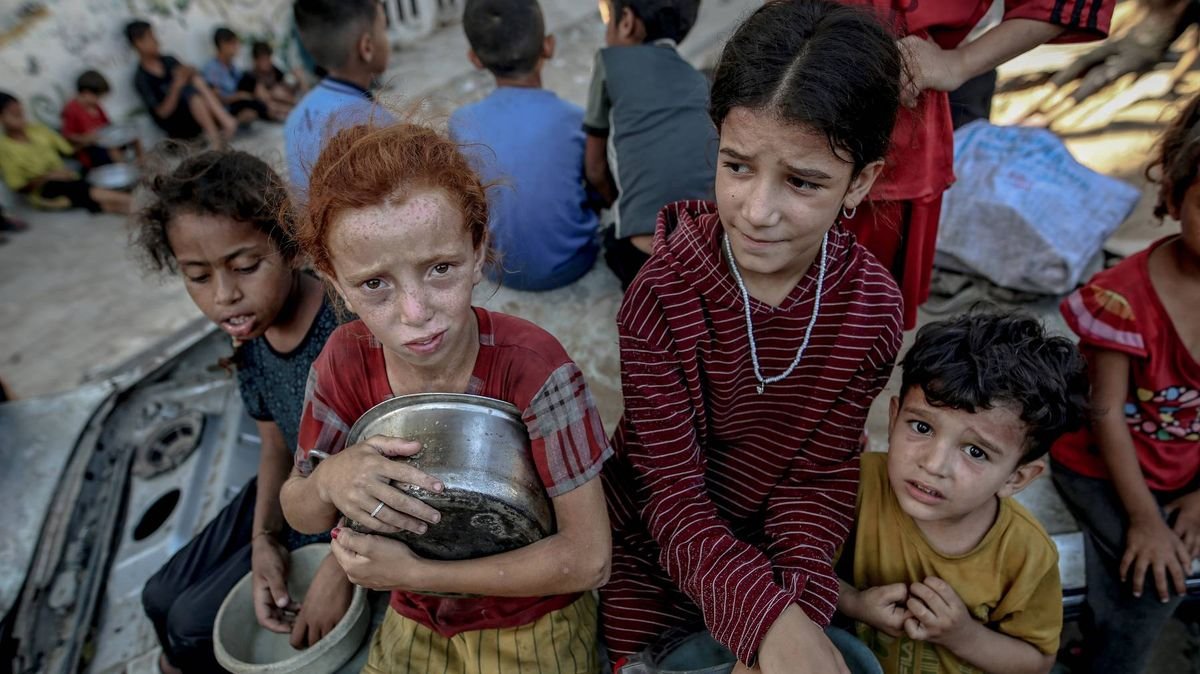
Despite the optimism surrounding the agreement, the devastating impact of the conflict is starkly visible in the war-torn streets of Gaza, where over two million Palestinians are grappling with a severe humanitarian crisis. The region’s inhabitants heavily rely on limited aid supplies allowed into Gaza, with Israel’s military actions forcing nearly 90% of the population to flee their homes multiple times, resulting in widespread displacement and destruction.
Satellite images from Google Earth vividly depict the extensive damage inflicted on Gaza’s urban areas, where numerous buildings lay in ruins. The flow of essential food supplies into Gaza, overseen by the Gaza Humanitarian Foundation supported by Israel, has been marred by reports of Palestinian casualties attempting to access aid distribution points, fueling further humanitarian concerns.
The ongoing conflict has taken a heavy toll, with reports indicating a significant loss of life, extensive property damage, and the collapse of critical infrastructure in Gaza. International outrage and protests against Israel’s actions have intensified, culminating in an arrest warrant issued by the International Criminal Court for Israeli Prime Minister Benjamin Netanyahu.
The ceasefire between Israel and Hamas, though a welcome respite, leaves behind a trail of destruction and loss that will continue to haunt the region. As the affected communities grapple with the aftermath, questions loom over the sustainability of the ceasefire agreement and the prospects for lasting peace in the war-torn region.
The remnants of what was once a thriving medical facility in Gaza now lie in ruins, emblematic of the widespread devastation inflicted on the region. The hospital complex, located near Gaza City’s coastline and Palestine Stadium, is a grim testimony to the toll of the conflict, with eyewitnesses recounting the harrowing scenes of death and destruction within the razed structure.
Al-Bayuk, a village in southern Gaza, stands as a stark reminder of the conflict’s impact, with satellite imagery revealing widespread destruction and desolation. Similarly, Deir Al-Balah, a humanitarian hub for displaced Palestinians, fell victim to Israeli military assaults, leading to significant casualties and infrastructural damage, exacerbating the already dire humanitarian situation in the region.
The ceasefire agreement, while a step towards de-escalation, underscores the urgent need for sustained international efforts to address the humanitarian crisis and rebuild the shattered communities in Gaza. The scars of war run deep, and the road to lasting peace and recovery remains fraught with challenges that demand a concerted global response.