

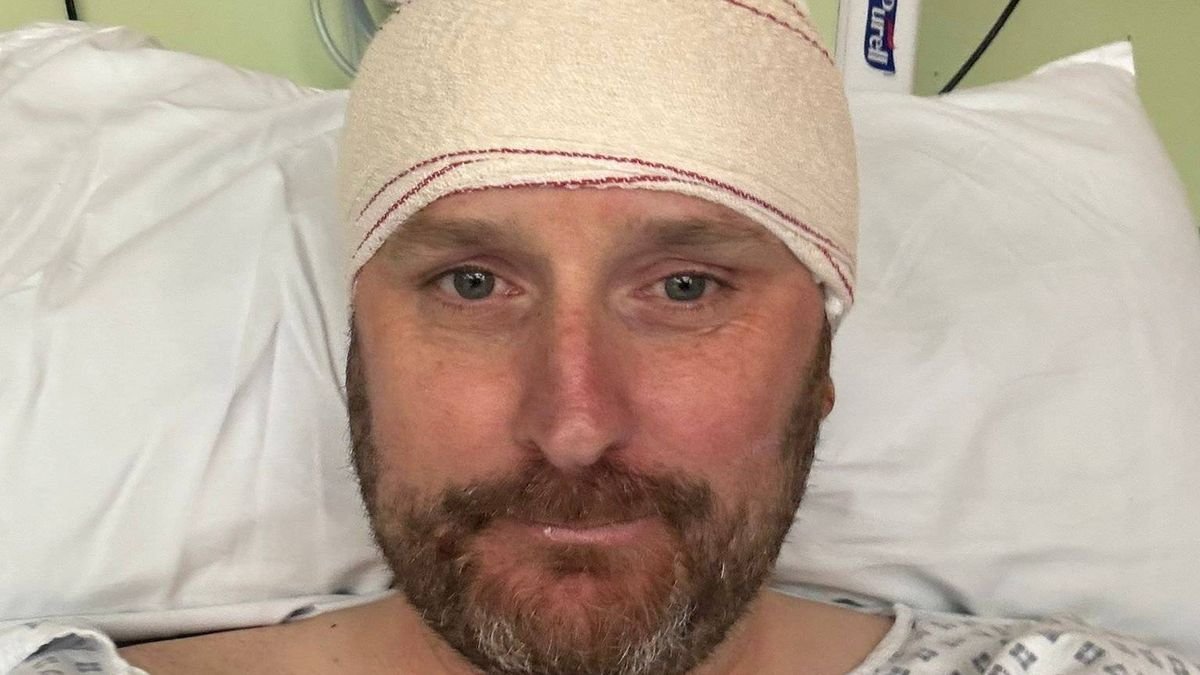

Firefighter Paul Whitaker, aged 42, received a devastating diagnosis following episodes of dizziness and light-headedness. Initially, medical professionals suspected a heart issue when Paul first reported feelings of weakness in 2023.
However, in April 2024, Paul was diagnosed with a grade three astrocytoma, a rapidly growing and recurring form of brain cancer. He underwent an awake craniotomy, seven weeks of radiotherapy, and a year’s course of chemotherapy in tablet form.
Presently, the Watch Commander is raising funds for innovative medical treatment that could offer him more quality time with his family. He is also advocating for increased awareness about brain tumors, as his symptoms did not align with the typical signs associated with his condition.
Paul expressed, “Receiving the news of having a brain tumor shattered our world. The prognosis is grim, with an average life expectancy of only a few years. We understand that this will eventually lead to my demise, but if we can extend that time, we would like the opportunity. While it comes at a cost, what value can you place on life?”
Paul, with 17 years of service as a firefighter, initially experienced dizziness in 2023 and sought medical attention in June of that year. Doctors initially suspected a heart problem, leading to multiple hospital visits for diagnostic tests.
Paul, a devoted husband and father of two, faced a life-altering moment when his wife Hayley, aged 40, noticed a drooping on the left side of his face in April 2024. Following advice from NHS 111 to promptly visit A&E for a suspected transient ischaemic attack (TIA) or ‘mini-stroke,’ an MRI scan revealed a significant brain lesion.
He was quickly transferred to Addenbrookes Hospital in Cambridge, where he underwent surgery to remove the tumor while awake. Reflecting on the experience, Paul shared, “Initially, we were unaware of the severity. However, upon removal and examination, it was classified as grade three.”
“The surgical team removed 95 percent, and I vividly recall counting down from 30 as my speech began to slur. Complete removal is challenging due to parts of the astrocytoma extending into the brain.”
The tumor, measuring 42mm, necessitated seven weeks of radiotherapy and a year of chemotherapy in tablet form. Paul and Hayley shielded their children, Noah, aged eight, and Ethan, aged six, from the distressing details.
Paul explained, “Involving the children in the chemotherapy process was necessary. I experienced fatigue, nausea, and loss of appetite. We aimed to maintain a sense of normalcy for as long as possible.”
In September, Paul completed his treatment and received positive news of tumor shrinkage. However, given its aggressive nature, a recurrence is anticipated, prompting Paul to raise funds for an immunotherapy vaccine.
The ADCV treatment, similar to DCVax-L, which had a successful clinical trial at King’s College Hospital, is a personalized vaccine that boosts the immune system’s ability to identify and eliminate tumor cells. In a significant trial, it more than doubled the five-year survival rate for patients with Grade 4 Glioblastoma.
Paul, with a projected life expectancy of three to six years, remains hopeful that this treatment could significantly prolong his life. He stated, “Given that the study focused on grade four tumors and mine is grade three, we are optimistic that the prognosis may improve further. The goal is to halt its growth.”
“My son Ethan is passionate about karate and is working towards his black belt. Noah enjoys football. They do not deserve this, and neither does anyone else.”
Within a span of ten days, Paul has raised £33,000 towards his £140,000 goal but requires £80,000 to cover the initial three doses of treatment. Subsequent doses are priced at £23,000 each, with manufacturing costs reaching £120,000.
Acknowledging his lack of prior knowledge about brain tumors, Paul highlighted the need for enhanced diagnostic tools for healthcare providers. He mentioned, “Common symptoms associated with brain tumors are headaches and seizures, but my symptoms did not align with the typical profile. Timely detection might have led to a lower-grade tumor.”
For those interested, Paul’s fundraising campaign can be found on GoFundMe.