

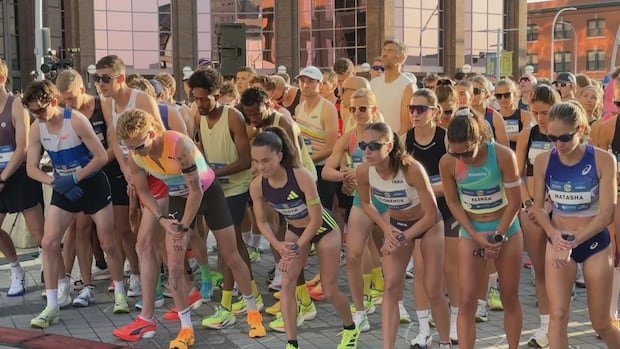

After the completion of the Edmonton Marathon, the race director issued an apology following the discovery of an error in accounting for detours, resulting in the race courses being longer than initially thought. This confirmation aligned with the suspicions of many participants.
In a statement released on Tuesday, Edmonton Marathon’s race director, Tom Keogh, revealed that the half-marathon and marathon courses were measured to be 674.7 meters longer than originally believed. Keogh explained that a thorough review of the course uncovered a miscalculation in the adjustments made due to detours, leading to the extended distance.
Acknowledging the mistake, Keogh emphasized that the error in calculating the detour-related adjustments, particularly the Wellington Bridge detour, was not fully offset by adjustments at the west end turnaround point. This admission came after concerns were raised by elite and amateur runners about the race distances.
Despite initial claims of correct course measurement and certification, Keogh admitted the occurrence of an error during the process. He mentioned ongoing discussions with Athletics Canada and other relevant parties to address the impact on this year’s results, which could affect qualification for prestigious events like the Boston Marathon.
One participant, Calgary runner Mitch Walz, expressed disappointment after realizing that the marathon distance was longer than anticipated, affecting his qualifying time for the Boston Marathon. Walz, who trained extensively for the event, highlighted the emotional toll of the situation, hoping for a resolution that would recognize his efforts.
Keogh emphasized the commitment to prevent similar errors in the future by reviewing certification processes with partners. However, the Boston Athletic Association clarified that adjusted results would not be accepted if the distance was inaccurately measured, but athletes exceeding the required length could still qualify based on their times.