

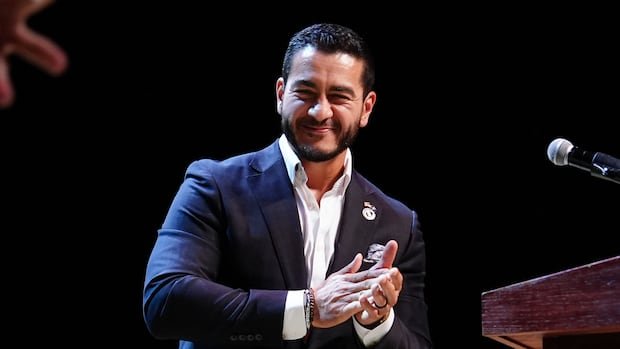

Abdul El-Sayed, a former public health official who capitalized on Democratic dissatisfaction with the party’s status quo, narrowly won over Rep. Haley Stevens in Michigan’s U.S. Senate primary, setting up a critical challenge for progressive forces in a pivotal battleground state. El-Sayed is now poised to compete against Republican Mike Rogers, a former congressman, in the upcoming November midterm election that will play a significant role in determining Senate control. The first task for El-Sayed is to unite various factions within the Democratic party following a fiercely contested primary that presented contrasting visions for a party seeking a way back to influence.
Stevens, who conceded defeat and pledged her support to El-Sayed, had the backing of the Democratic establishment, including outgoing Sen. Gary Peters. El-Sayed, on the other hand, promised a more assertive stance against entrenched corporate powers and President Donald Trump. Despite only narrowly surpassing Stevens, El-Sayed characterized his victory as a groundbreaking political event, quoting Muhammad Ali by saying, “we shook up the world.”
Curtis Hertel, chair of the Michigan Democratic Party, emphasized the need for unity heading into the November elections, stressing the importance of collective efforts to reclaim the country. He described El-Sayed as a dedicated advocate for the people. Meanwhile, Trump criticized El-Sayed during a speech in Las Vegas, accusing him of anti-Israel sentiments, which El-Sayed refuted by condemning antisemitism and clarifying his stance on Israel’s actions in Gaza and the Palestinian territories.
El-Sayed’s victory, though narrow, marks a significant departure for the Democratic Party. In the 2018 gubernatorial primary, he faced a 21-point loss to Gretchen Whitmer, now the governor. El-Sayed’s platform centered on key issues such as “Medicare for All,” reevaluating military aid to Israel, and reforming campaign finance. Notably, he garnered support from progressive figures like Sen. Bernie Sanders and Rep. Alexandria Ocasio-Cortez, who framed the election as a grassroots movement challenging the establishment and big-money politics.
Stevens, a moderate candidate and four-term congresswoman, received support from Senate Minority Leader Chuck Schumer and substantial outside funding, including a record outlay from the American Israel Public Affairs Committee (AIPAC). Her campaign emphasized manufacturing and the economy, highlighting her past electoral successes as evidence of her capability to defeat Rogers.
The upcoming Senate race in November holds significant implications for the balance of power in the Senate during the final years of Trump’s presidency. Moderates argued that El-Sayed might face a tougher competition against a Republican in the general election compared to Stevens. The candidates’ contrasting approaches attracted attention, with El-Sayed positioning himself as an anti-establishment advocate pushing for a progressive agenda.
Voters like Kenneth Woodside and Nessa Fuller expressed differing perspectives on the candidates, reflecting the broader divisions within the electorate. The race saw substantial outside spending, with national groups investing unprecedented amounts, making it a notable test of external financial influence. Groups supporting Stevens poured over $50 million US into the campaign, with a significant portion coming from AIPAC and its affiliates.
Despite the focus on domestic issues, the race also brought U.S. policy towards Israel to the forefront, with El-Sayed advocating for a shift in military aid while Stevens maintained a strong pro-Israel stance. The conflict in Gaza accentuated the debate within the Democratic Party, underscoring the complex dynamics at play in the race for Michigan’s Senate seat.