

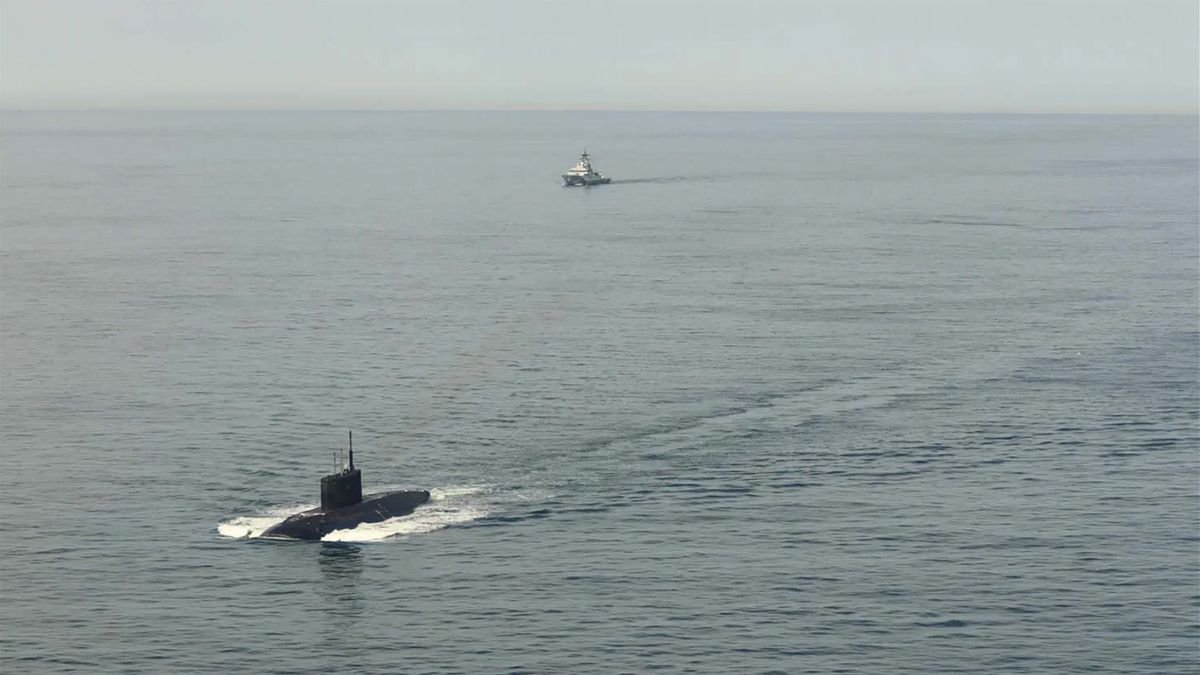

A Vladimir Putin submarine with fuel leakage is being closely monitored by NATO as it travels on the surface near the British coast. The Novorossiysk, a diesel-electric Black Sea fleet submarine, has encountered a hazardous situation due to the fuel leak in its hold. Although the submarine has the potential to carry nuclear weapons, there is no confirmation of the presence of Kalibr missiles onboard. Reports from a Russian source indicate that the submarine is facing significant technical issues following a mission in the Mediterranean.
Over the past few days, the Varshavyanka-class attack submarine Novorossiysk has been under scrutiny by the French, British, Belgian, and Dutch navies as it passed through Brittany, the English Channel, and into the North Sea. The problems with the vessel were initially disclosed by the Russian Telegram channel VChK-OGPU, which has connections to intelligence sources. The Black Sea Fleet has denied any malfunction or emergency surfacing of the submarine off the coast of France, emphasizing that the submarine was on a scheduled transit and adhering to international navigation rules by traveling on the surface through the Strait of Dover.
Accompanied by the Russian tugboat Yakov Grebelskiy, the 3,100-ton submarine has prompted a warning from NATO Maritime Command, stating, “We are watching,” without mentioning the reported technical issues. Dutch naval forces, including vessel Zr. Ms. Luymes, an NH90 maritime combat helicopter, and the coast guard, have taken over escort duties from the British forces to prevent any potential sabotage of undersea infrastructure by Russian ships.
Earlier, the French Navy and Belgian Navy had deployed a frigate and patrol vessel, respectively, to monitor the Novorossiysk. Additionally, a US Navy patrol plane conducted surveillance over the submarine near Gibraltar as it commenced its journey back to Russia. The Novorossiysk is expected to head towards a Russian naval port in the Baltic Sea, but concerns remain as reports indicate fuel is leaking directly into the hold, posing an explosive risk. The crew is reportedly facing challenges in repairing the malfunctions due to a lack of spare parts and qualified specialists, leading to the need to pump out the leaking fuel directly into the sea.